From Pattern Pieces to a collection
Pattern Pieces was where I learned to take a game all the way: interaction model, visual language, a design system and a TestFlight beta. Once that worked, the same approach could carry more than one game. The studio grew out of it.
-
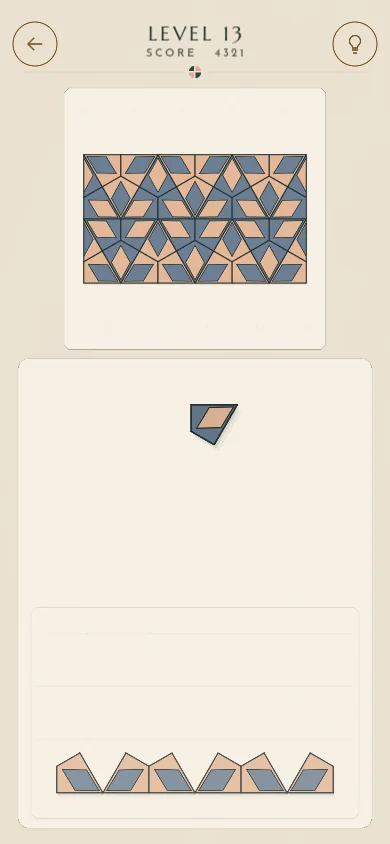 Pattern Pieces
In development
A calm geometric puzzle: rebuild a pattern from falling pieces.
-
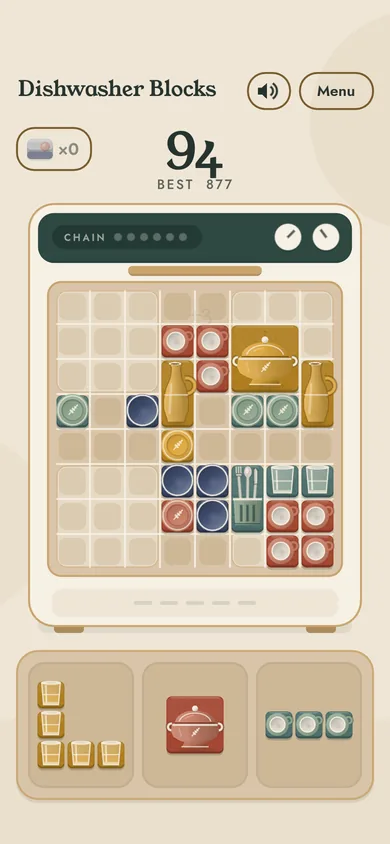 Dishwasher Blocks
On the App Store
An endless block puzzle inside a 1950s dishwasher.
-
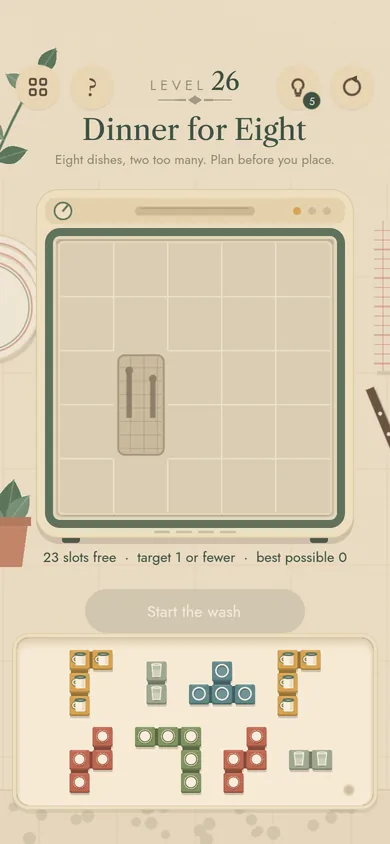 Tidy Things
On the App Store
A level-based packing puzzle: fit every dish into the rack.
-
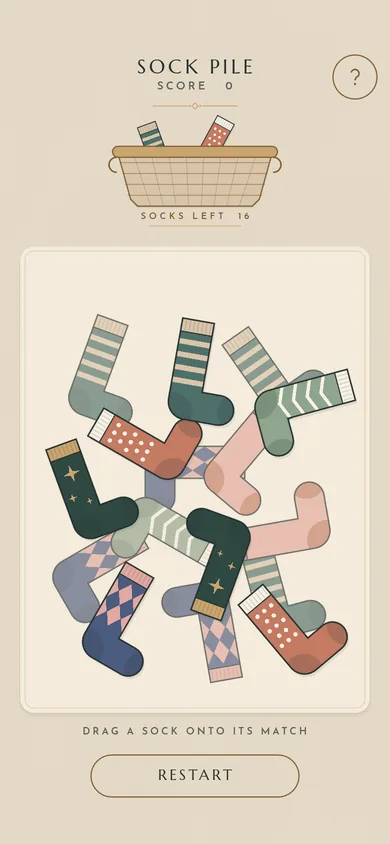 Sock Pile
Prototype
Pair socks from a tumbling laundry pile.
-
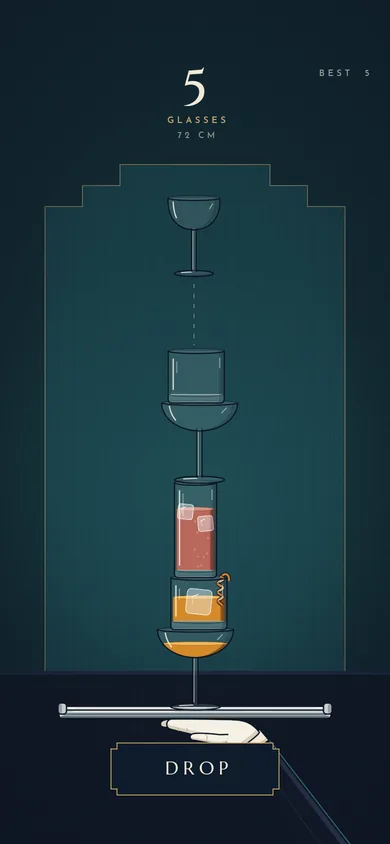 Cocktail Stack
Prototype
Balance a tower of glasses on a waiter’s tray, with real physics.
-
Sep 2026
Pattern Pieces
A calm geometric puzzle, built with Claude Code in Godot. Its UI becomes a design system.
-
Early Oct
Into TestFlight
A beta with outside testers; every report goes into a feedback log and a backlog.
-
Mid-Oct
More games, one studio
Tidy Things and Dishwasher Blocks, two takes on loading a dishwasher; the Ootsy Bootsy identity; then Sock Pile and Cocktail Stack.
-
Late Oct
Towards release
Dishwasher Blocks 1.0 goes into TestFlight testing.
-
Nov 2026
On the App Store
Tidy Things launches on 14 November, and Dishwasher Blocks is on the App Store too.
My role
- Game design
- Concept, rules and pacing for each game, and the levels or loads it is played through.
- Product decisions
- What each milestone includes, what gets cut, and the release calls: price, iPhone or iPad, and how much help a player gets.
- UX and visual direction
- How each game is controlled and read at a glance, and its setting: a dishwasher, a laundry basket, a 1920s lounge.
- Implementation with AI
- I direct the build in Godot, one milestone at a time, and approve every visual change before it lands.
- QA
- Unit and end-to-end tests, solvers and simulations, rendered screens at phone size, and TestFlight builds on my iPhone.
- Publishing
- Release audits, App Store metadata, privacy and support pages, and the submission itself.
From concept to the App Store
Every game follows the same path. What changed since Pattern Pieces is how much of the evidence comes first: the newer games have tests from their first milestone, and their rules are checked by solvers or simulations before I judge them by feel.
-
Concept
I describe the game, its setting and the first milestone.
-
Build
One milestone at a time with AI, in a standalone Godot project.
-
Prove
Tests, plus solvers or simulations for fairness.
-
Review
Rendered screens at phone size, then the game on a phone.
-
Release
An audit of every store claim against the code, then TestFlight and submission.
One design system, five games


The studio’s look comes straight out of the Pattern Pieces design system: no new colours, fonts or ornaments. Thoughtful design means exact geometry and nothing decorative without a job. Playful mischief is one warm quarter in a quartered O, a little wobble, a single sparkle, and never a cartoon mascot. The vintage side is Art Deco frames, engraved capitals and mid-century glazes. Each game then gets a setting of its own, and the newer ones carry verbatim copies of the shared design-system files rather than links to another project, so every game builds on its own.
Dishwasher Blocks: a game nobody could lose
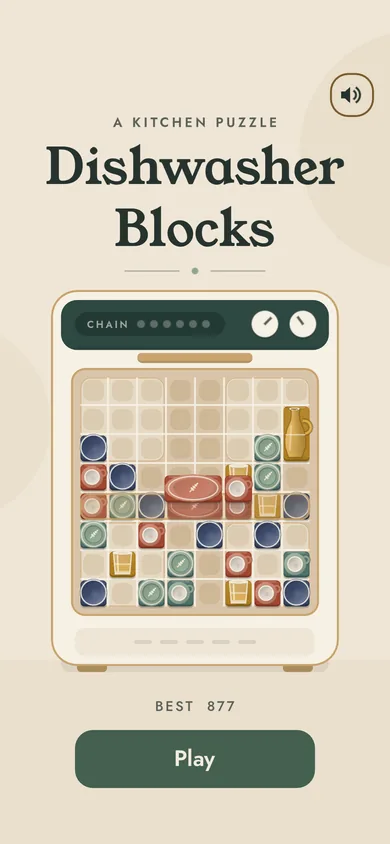
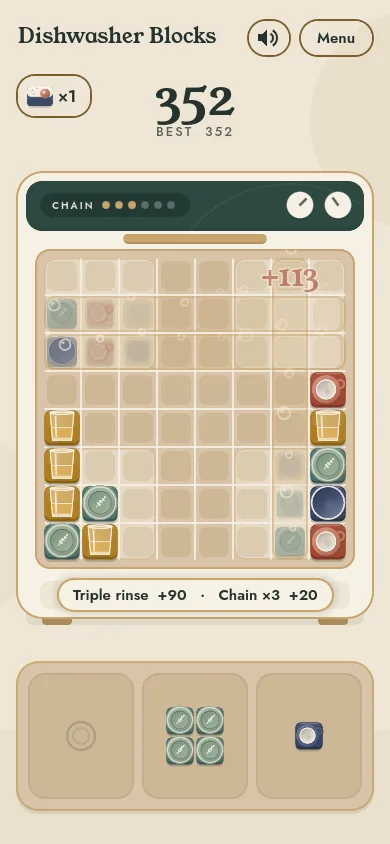
On the App Store (App Store). An endless block puzzle set inside a 1950s dishwasher: load kitchenware into the rack, three pieces at a time, and full rows, columns or corner zones rinse away. All the art is drawn in code, with colours taken from the Pattern Pieces palette.
Balanced with simulations, not by feel
Playtesting never reached Game Over. Seeded simulations showed why: a simulated careful player never lost a single game, mainly because squares could clear at any of 36 positions. Squares now clear only in four marked corner zones, and the piece mix gets gradually harder over the first 150 placements.
Why Every simulated run now ends with a fair Game Over, and a careful player lasts about ten times longer than a careless one: a median of 167 placements against 14.
Trade-off Fewer surprise clears.
Tidy Things: fit every dish
On the App Store since 14 November 2026 (App Store). A calm packing puzzle. Drag dishes from the sink into the rack, tap to turn them, and fit them around a cutlery basket and fixed tines. Some levels have more dishes than fit: reach the target for Clean, or the best possible for Spotless.
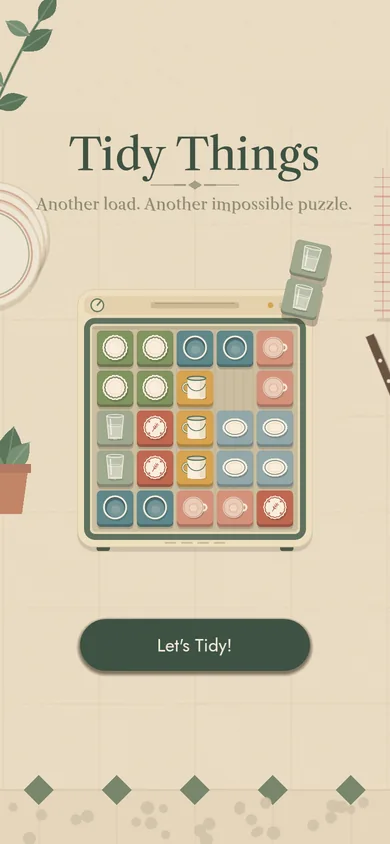
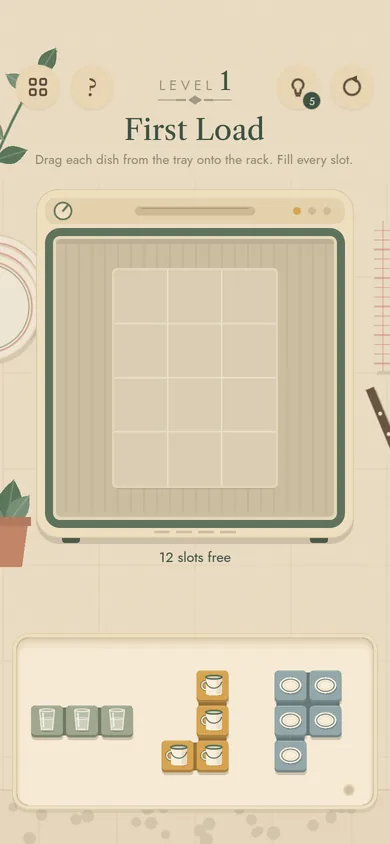
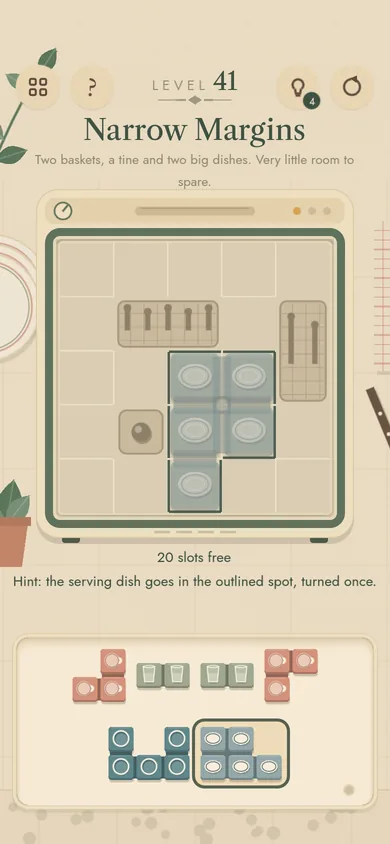
Every level is checked by an exhaustive solver on the same rules as the game: it is solvable, its best result is right, and its target is reachable. Hints are a shared allowance of five per player.
Sock Pile: pairs from a tumbling pile
Prototype. Drag a sock onto its match and the pair rolls away. Buried socks are faded and can’t be picked up until you uncover them. Clear the pile and the basket tips out a fresh load, a little bigger and deeper each time.
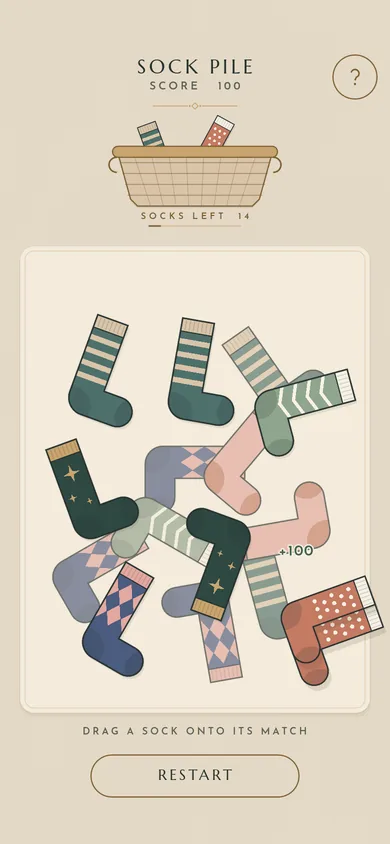
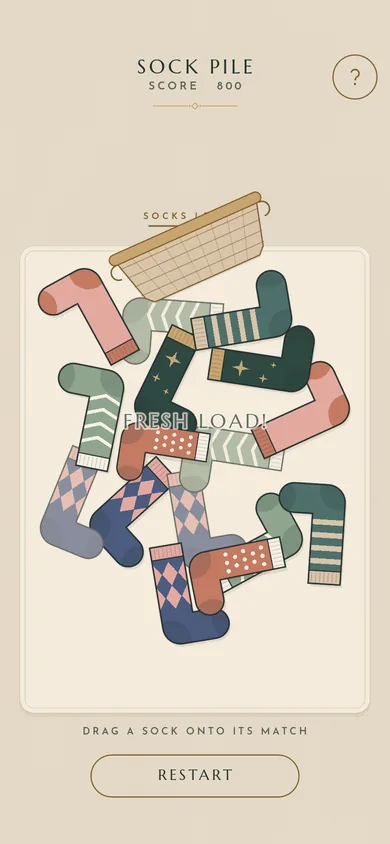
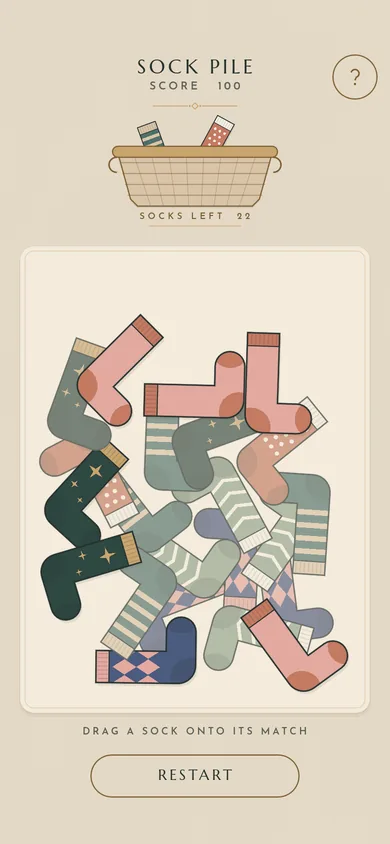
An earlier milestone topped the pile up every few matches, so it never emptied and there was no moment of finishing it. The basket now comes only when the pile is cleared, and each load is checked to be clearable in any order, so a player can never be trapped.
Cocktail Stack: a tower that has to balance
Early prototype. Guide a glass over a waiter’s tray and drop it; real 2D physics decides whether it lands, slides or tips. Five glass types in a 1920s hotel lounge. The drinks are purely visual and never change the physics.
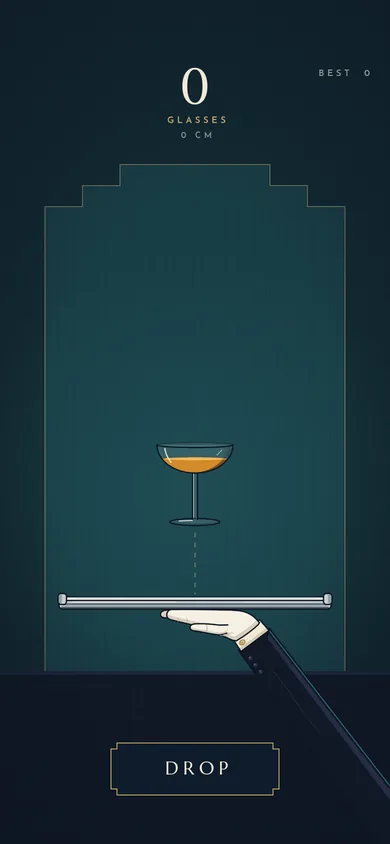
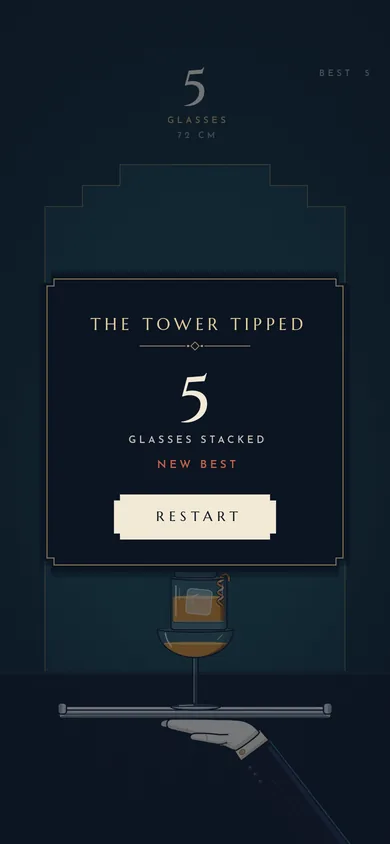
Because glasses are on screen throughout play, the App Store age rating was considered before any store copy: the questionnaire will be answered honestly from the shipped content, and the store text stays about balancing and stacking.
The studio’s own home
The studio has its own website, with a page per game and one privacy policy and support page shared by all of them: pattern-pieces.com. This page is about my part in it.